

omqm.over-blog.com/
9 Janvier 2021

Solid state drives, because they have no moving parts, tend to be cooler and quieter than hard drives. They are durable, shock-resistant, vibration-resistant and reliable. The trade-off to all of these benefits is both cost and size constraints. Traditional hard drives are significantly less expensive than solid state drives. Solid state drives, or SSDs, are devices for storing your digital content. They have little to no moving parts, which makes them faster than a traditional hard drive that relies on a spinning disk. If speed is an important consideration for your work or lifestyle, a solid state drive is worth a look. Just a few years ago, internal SSD hard drives were so expensive that external SSD hard drives were out of the question. But today they are a reality. External SSD vs External HDD. When it comes to the main purposes of an external drive, whether it be a mechanical drive or a solid state drive, both categories satisfy similarly. The standard form factor for many years has been the 2.5-inch such as the MX500, which fits inside the drive bay of both laptop and desktop computers.Because many users replace their hard drives with solid state drives, the 2.5-inch drive has become a standard for all HDDs and SSDs.
With Xbox Series X and Series S expandable storage extending to external USB drives, the Samsung T7 Portable SSD should be on your radar. Its latest solid-state lineup delivers a balance of.
If you're wondering whether you should get a flash drive or an external hard drive for backup, it really depends on how much space you need, your concerns over physical damage, and the amount you're willing to spend.
Flash drives and SSDs are often sturdy, withstanding damage if they drop onto a hard surface. However, hard drives are a good choice if you need more storage, but many flash drives today can store as much as 128GB.
There isn't too much of a difference between external SSDs and flash drives. Both are used to store files in solid-state flash RAM and can plug into a computer using a USB port. The main difference between them is their shape and size.
SSDs are generally shaped like hard drives because they're usually used to replace internal hard drives, making it easy for them to fit into the computer bay. However, this shape isn't necessarily needed when used as an external drive.
Normally, SSDs run faster than flash drives, but this is due to their USB 3.0 connectors, which help optimize performance. Most flash drives also have USB 3.0 today. Keep in mind that speed won't be affected unless the computer has a USB 3.0 port.
Ultimately, both devices can be useful for data storage.
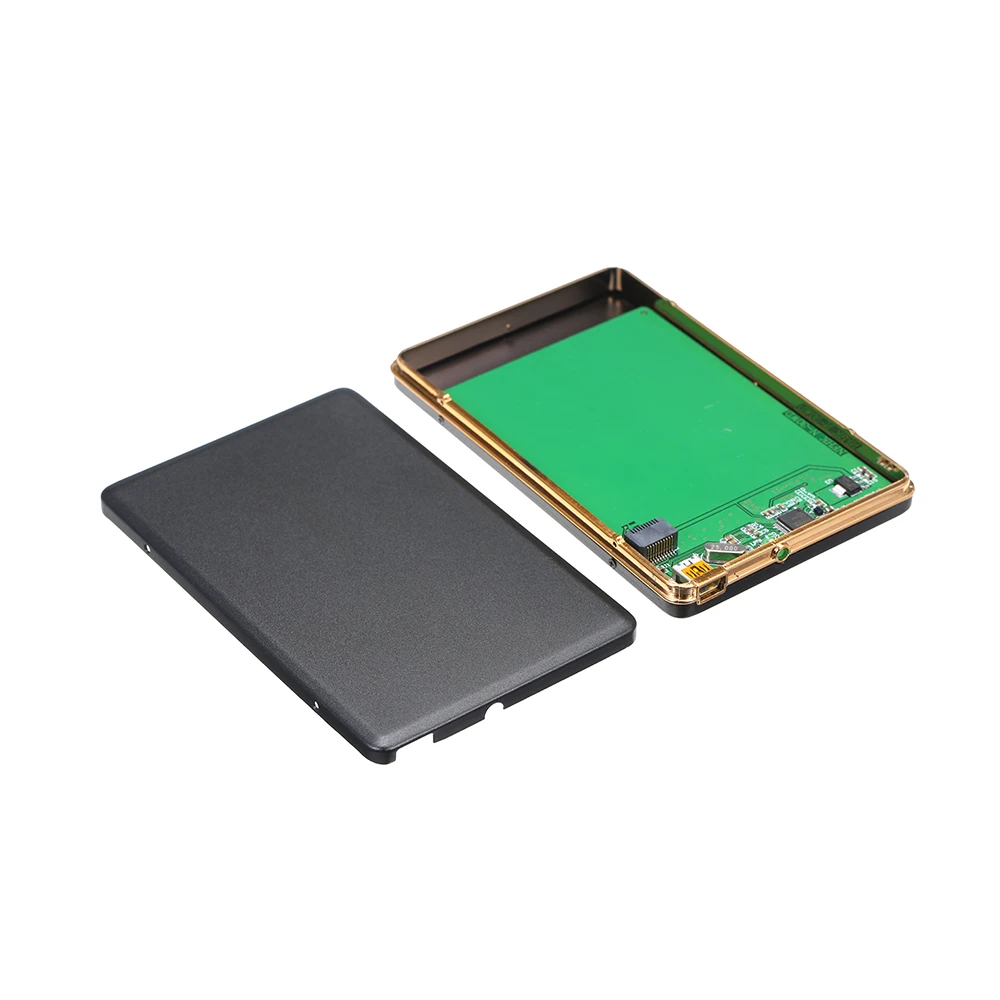
Unlike flash drives and external SSDs, external hard drives are mechanical, which makes it easier for them to sustain damage. They also cost more in most cases. The one upside of a hard drive is that the storage capacity is higher. So, if you need a vast amount of storage space, you may be able to find a 2TB hard drive for about $100.
Portability is the ultimate benefit of getting a flash drive over SSDs and hard drives. If you really want to be able to carry your data wherever you go, you can find more convenience with USB drives, which are typically no larger than a finger and can hold as much as 128GB. Using a flash drive, you can store plenty of information, without the inconvenient size and shape of an SSD.
There are many options available for flash drives today, allowing you to customize nearly every aspect from RAM to the external design, giving you an easy-to-recognize data storage solution that may be better than either an SSD or HDD in many cases. You shouldn't have a hard time finding a flash drive storage solution that provides you with ample storage space and combined convenience, particularly when traveling.


/image%2F6303232%2F20210111%2Fob_59a7a7_adobe-premiere-cc-wiki.jpeg)
/image%2F6303232%2F20210111%2Fob_cac67b_6tb-external-hard-drive-price-in-india.png)
/image%2F6303232%2F20210111%2Fob_a756dc_latest-microsoft-office-2018.jpeg)
/image%2F6303232%2F20210111%2Fob_eb647b_mpeg-streamclip-windows-portable.png)